What is Kinstretch?
The mobility method that fixes what stretching can't.
In Westerly, RI? Train Kinstretch in person at EPS
Stretching, yoga, and foam rolling don't create lasting change.
Stretching pulls passive tissue but doesn't train your nervous system to control new range, so whatever you gain on the mat disappears the moment you move. Yoga emphasizes flexibility without the strength to own that range under load. Foam rolling provides short-lived relief, not adaptation; the tissue responds the same way the next day. None of these methods teach your body to actually use the range you're chasing.
Kinstretch is mobility training, not stretching.
Kinstretch is a movement enhancement system that develops maximum body control, flexibility, and usable ranges of motion. It was created within Functional Range Systems by Dr. Andreo Spina, a researcher and clinician whose work sits at the intersection of sports science, anatomy, and rehabilitation. The system treats joint health as a trainable skill, not a passive state.
How it differs
- vs Yoga: Yoga holds passive positions for length; Kinstretch trains active strength at end range so the nervous system accepts and owns new motion.
- vs Pilates: Pilates builds core stability in mid-range; Kinstretch targets joint capsule health and articular range that Pilates leaves untouched.
- vs Generic mobility drills: Most mobility work is unstructured and non-progressive; Kinstretch uses precise isometric loading protocols grounded in FRS research.
Three principles, one method.
CARs
Controlled Articular Rotations
Daily joint-by-joint rotations that map and maintain your active range. CARs are the assessment and maintenance tool: the baseline that tells you and your coach exactly where each joint lives.
PAILs / RAILs
Progressive & Regressive Angular Isometric Loading
Isometric contractions at end range that teach your nervous system to own new positions. PAILs expands range; RAILs reinforces it. Together they create durable, usable mobility.
End-Range Training
Strength where it matters most
Building strength where you're weakest, at the edges of your range, so injuries stop happening there. Tissue loaded at end range adapts and reinforces; tissue that's only ever stretched stays fragile.
Built for anyone with a body that moves.
Athletes
Recover faster, move with more precision, and eliminate the joints that keep failing you mid-season.
Post-injury
Rebuild tissue tolerance and active range in the areas that PT left unfinished.
Desk workers
Undo the daily compression from sitting and restore range in hips, thoracic, and shoulders.
Aging populations
Maintain joint health and active range as tissue naturally stiffens. This is the protocol that keeps you moving well for decades.
Lifters
Open the range you need to squat deeper, press stronger, and stay injury-free under load.
Trained by Rachel.
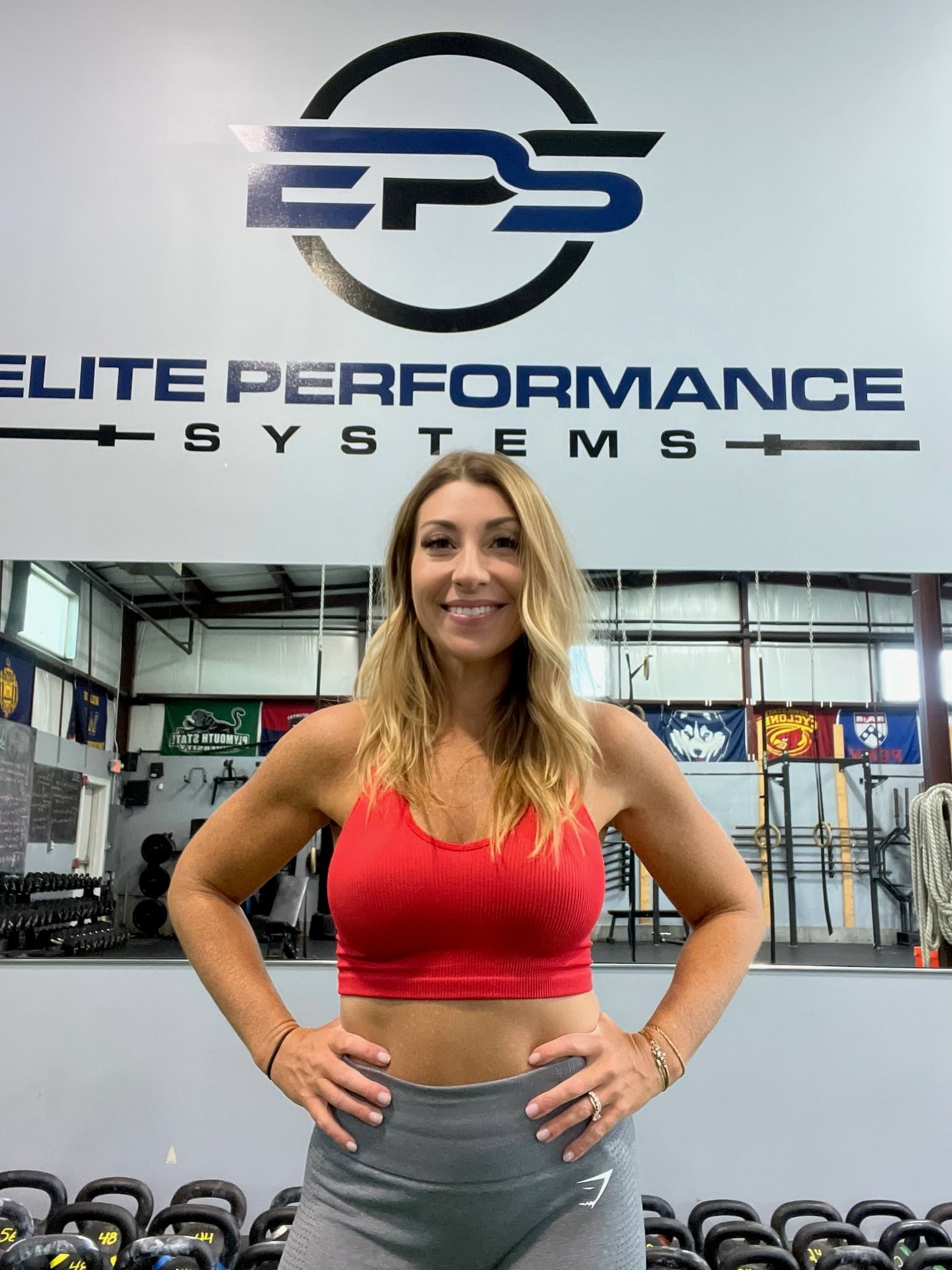
Rachel is a certified Kinstretch instructor and Functional Range Systems practitioner with years of experience teaching mobility to athletes and everyday movers in Westerly, RI. Her coaching is grounded in the science of joint health: systematic, progressive, and tailored to where each person actually is. Full credentials to come.
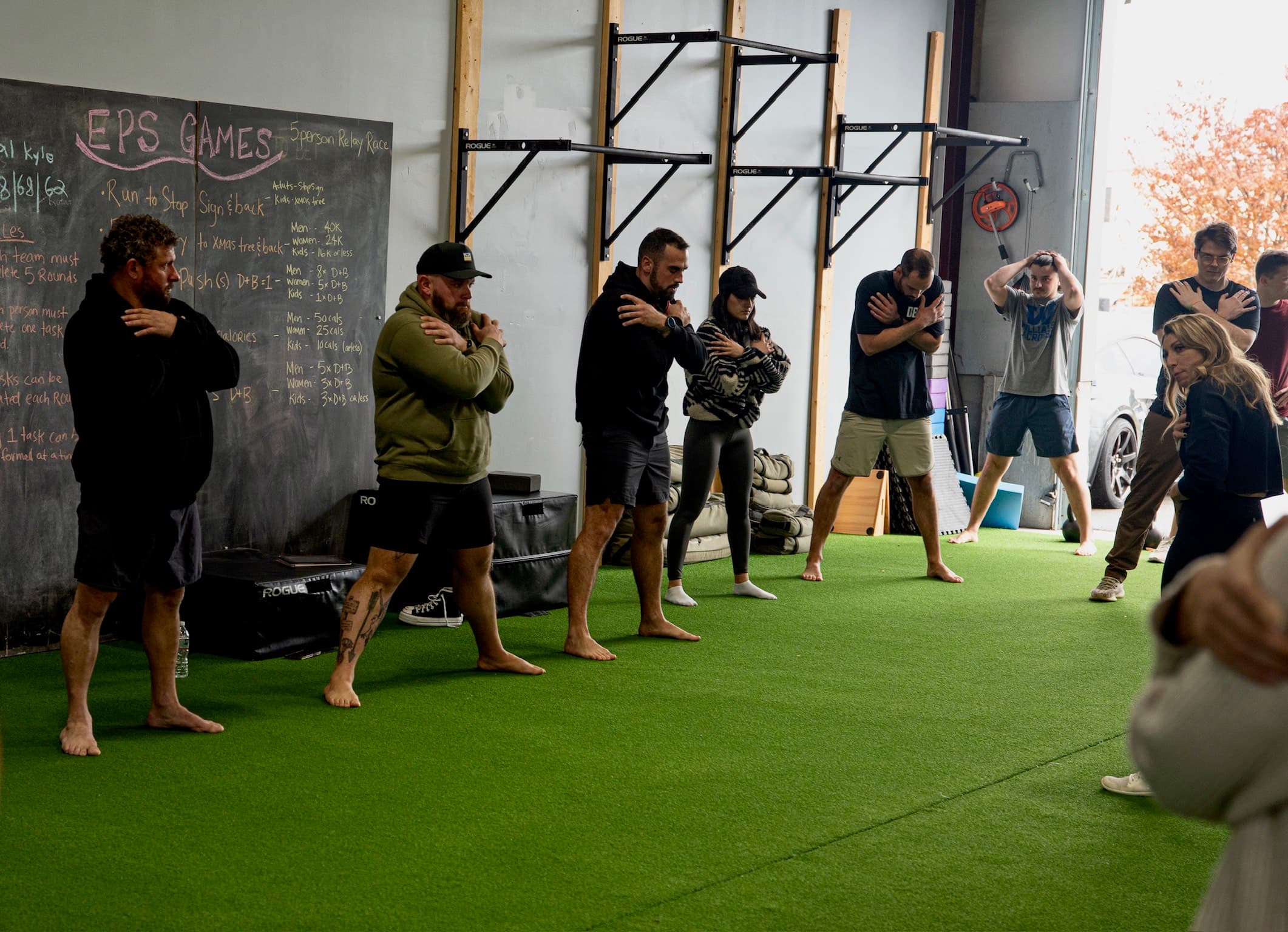
Group Classes
Strategic strength and conditioning, scaled for every ability and led by expert coaches. This is where almost everyone at EPS trains: real programming, a real community, one flat membership.
See group classesLooking for open gym or one-on-one training? Both are limited and by approval once you're established at EPS. See other options.
Kinstretch FAQ.
How is Kinstretch different from yoga?
Yoga emphasizes static holds and breath; Kinstretch is active, strength-based, and trains the nervous system to control specific joint ranges. You leave a yoga class loose; you leave a Kinstretch session with new motor control.
Do I need to be flexible to start?
No. Kinstretch isn't about flexibility. It's about building usable, controlled range from wherever you are. Beginners progress fastest because there's the most untapped range to develop.
Will it help my knee / back / shoulder?
Often, yes. Kinstretch trains the joints around the problem area and rebuilds tissue tolerance at end range. It's not medical care, but it's the most evidence-based mobility approach available, and many EPS members come specifically for chronic joint issues.
How long until I see results?
Most members feel real change in active range within 4 to 6 weeks of consistent training. Lasting structural adaptation is months, not weeks, but the trajectory is clear early.